Oleksandr Dehtiar grew up in Verkhnya Syrovatka, a village near Sumy. He graduated from university, got a job as a press operator at a factory, and spent his weekends the way a lot of men in his part of the world do: lifting kettlebells, playing table tennis when he felt like it, and fishing when he didn’t.
He did not have grand plans. He was living his life.
In 2022, his country needed him, so he went. He spent two years in eastern Ukraine. In the summer of 2024, he was severely wounded. He lay in a coma for three weeks — first in Dnipro, then in Kyiv — before doctors evacuated him west. At the Unbroken rehabilitation center, he had to learn how to speak again. Then how to walk.
The war had taken his right arm and left hand.
His mother, Tetiana, never left his side.
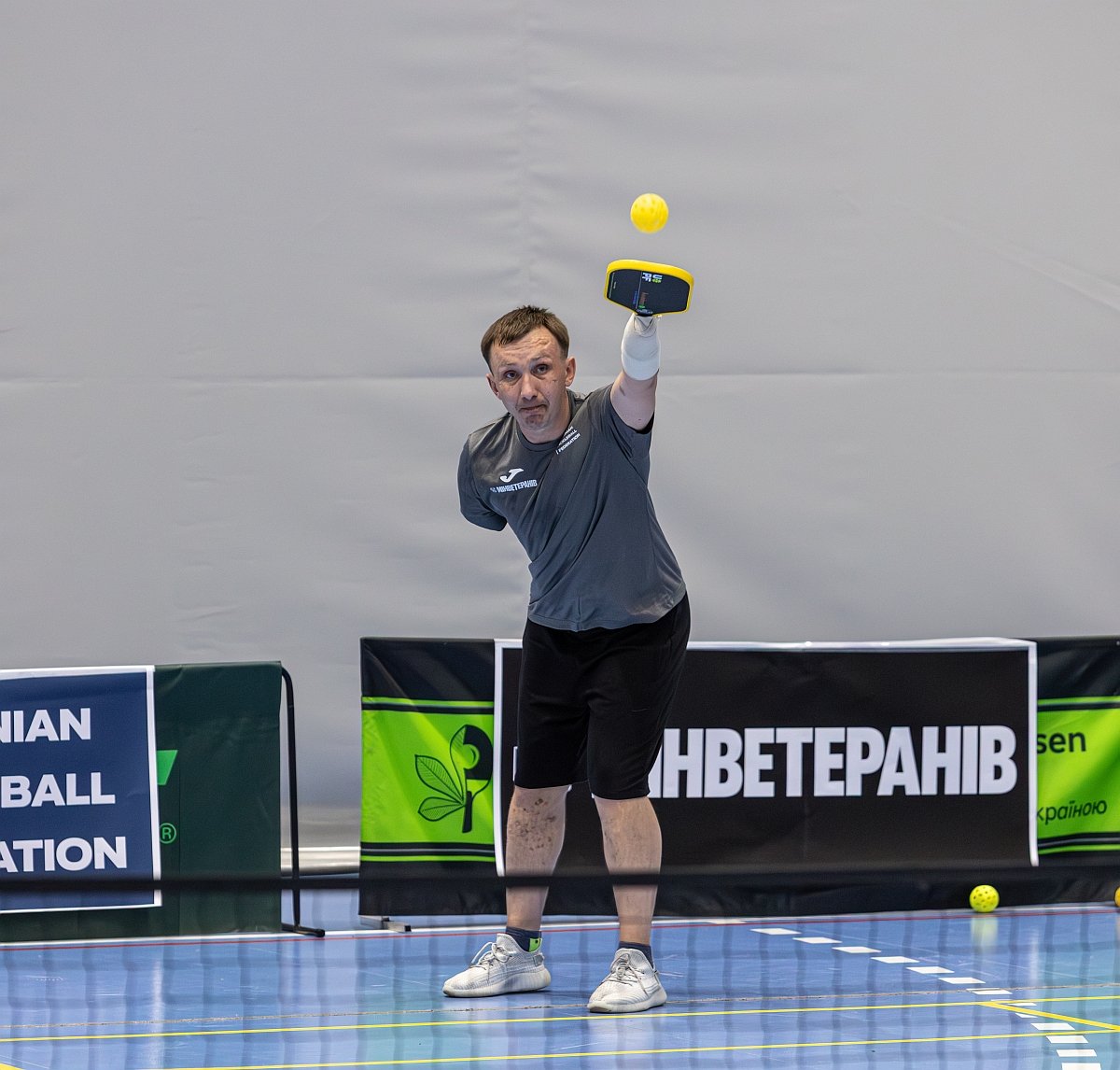
Ten months after the injury, Oleksandr entered a table tennis competition. Upper-limb amputee category. He finished second. He uses an elastic bandage to hold the paddle — the same adaptation he would later bring to pickleball.
Mykola Zarytskyi is from Bilopillia, also in the Sumy region. He studied mechanical engineering, served in the border guard service, and trained in athletics from the time he was young. He became a Ukrainian champion. That was before the war.
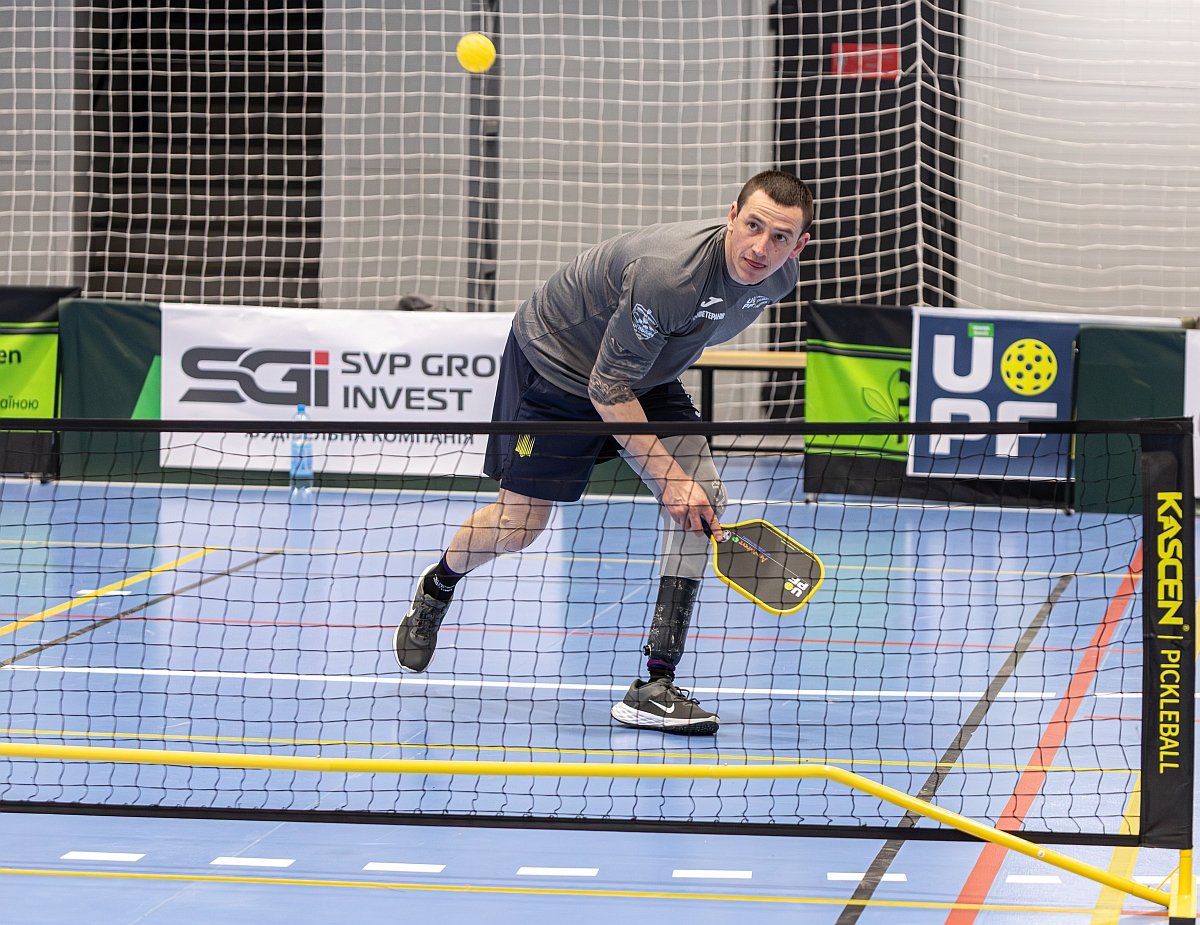
After the full-scale invasion began, Mykola served on some of the hardest stretches of the front line — Lysychansk, Bakhmut, the Kherson region. He was severely wounded. What came after was the long work of rebuilding.
In 2023, he went to Germany and competed for Ukraine at the Invictus Games. Shot put: gold. Discus: silver. Rowing endurance: gold. Rowing sprint: silver. He carried the Ukrainian flag at the opening ceremony. He came home with four medals and something harder to measure — the understanding that sport could give a person back their life.
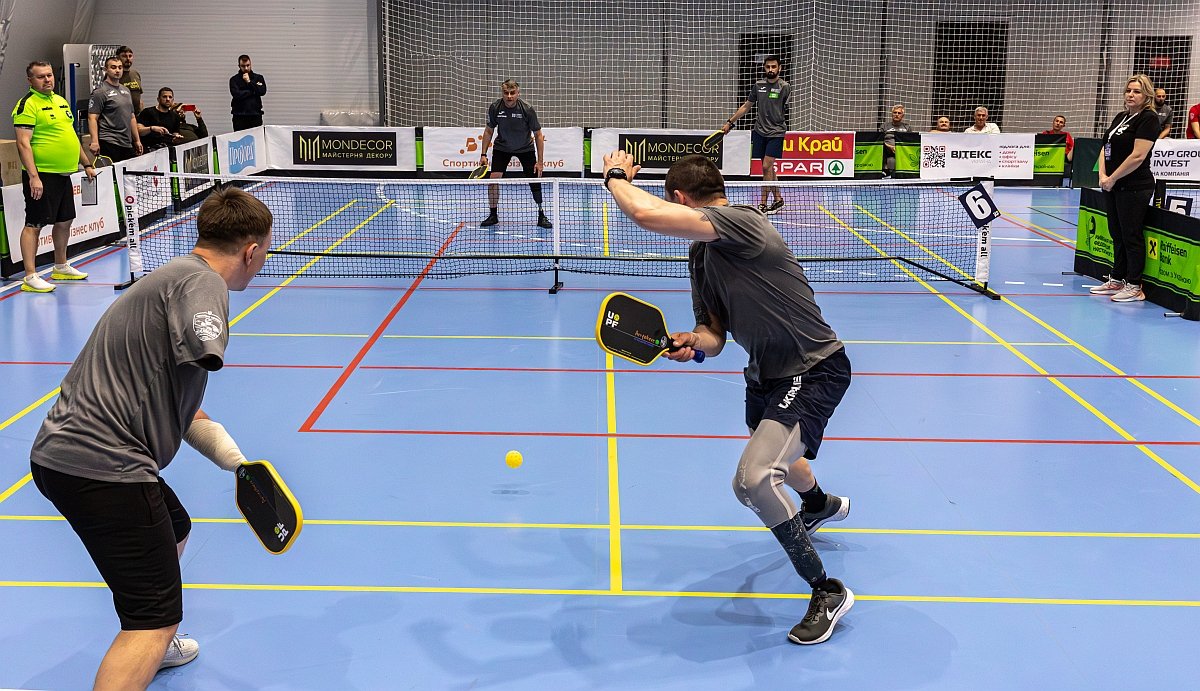
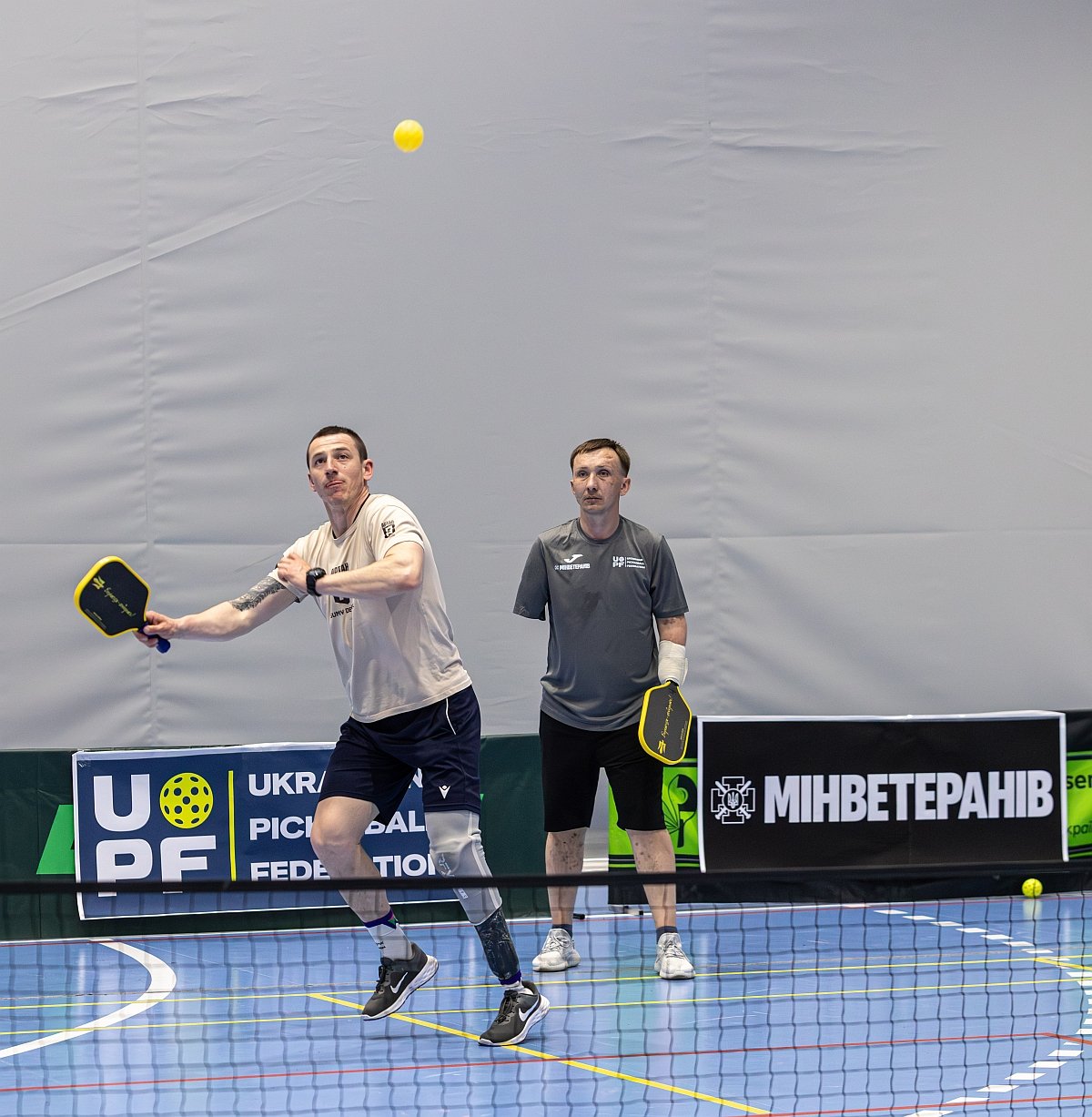
The two men knew each other by name. Both were from Sumy, both veterans, both amputees navigating the same difficult road. But they had never really crossed paths until they registered for the First Ukrainian Veterans Pickleball Championship in the spring of 2026. They decided to compete as a team almost immediately after arriving.
There had been no months of training together. No joint preparation. Just two men from the same region who understood each other without needing much explanation.
But Mykola had spent years in competitive athletics, and he knew what to do with that. From the first session, he worked on Oleksandr’s confidence — quietly, methodically, the way good teammates do it when they’re not trying to prove anything. He helped him read the game. Helped him find his spots on the court. Helped him believe the next point was winnable. The technical guidance was there. The strategic thinking was there. Mostly it was the trust. Not a coach and a student. One man and another.
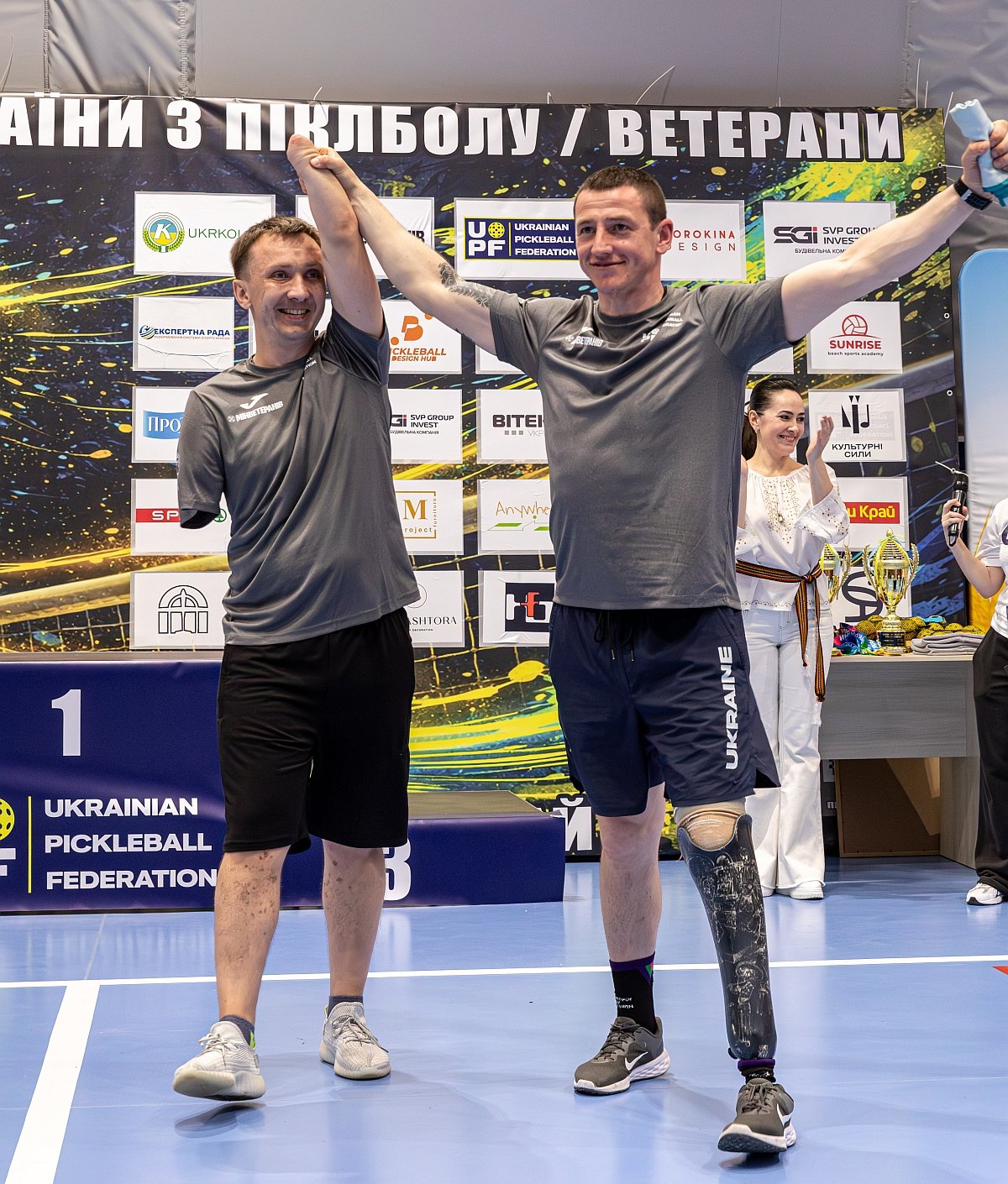
One played without hands. The other played on a prosthetic leg. Together they found a rhythm. They ran down balls in the corners, dinked, drove, and left nothing on the floor but sweat.
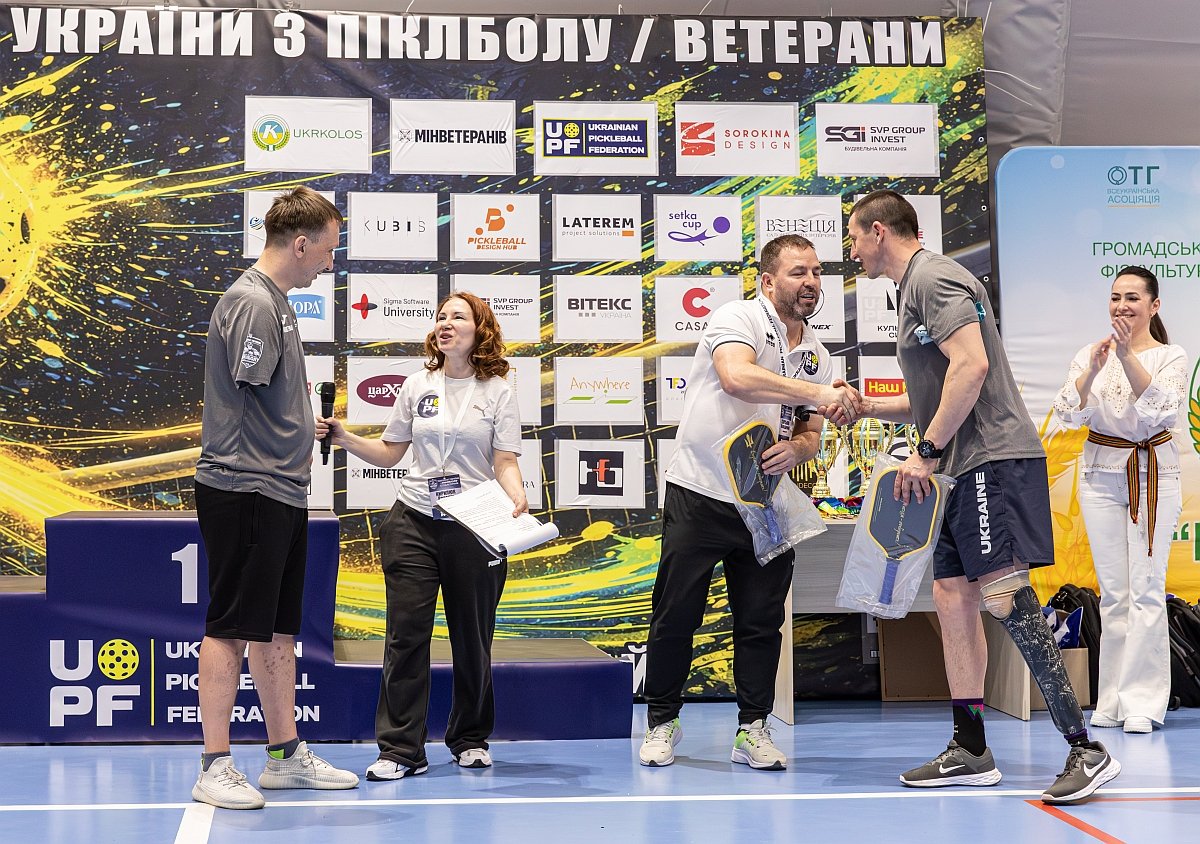
They won bronze.
Then UPF called them back to the stage for something else. A special award — Fantastic Team. They handed each of them the patriotic Freedom Fighter Paddle from San Diego: the Leleka, the Tryzub, Shevchenko’s verse. It was a quiet way of saying what everyone in the gym already knew.
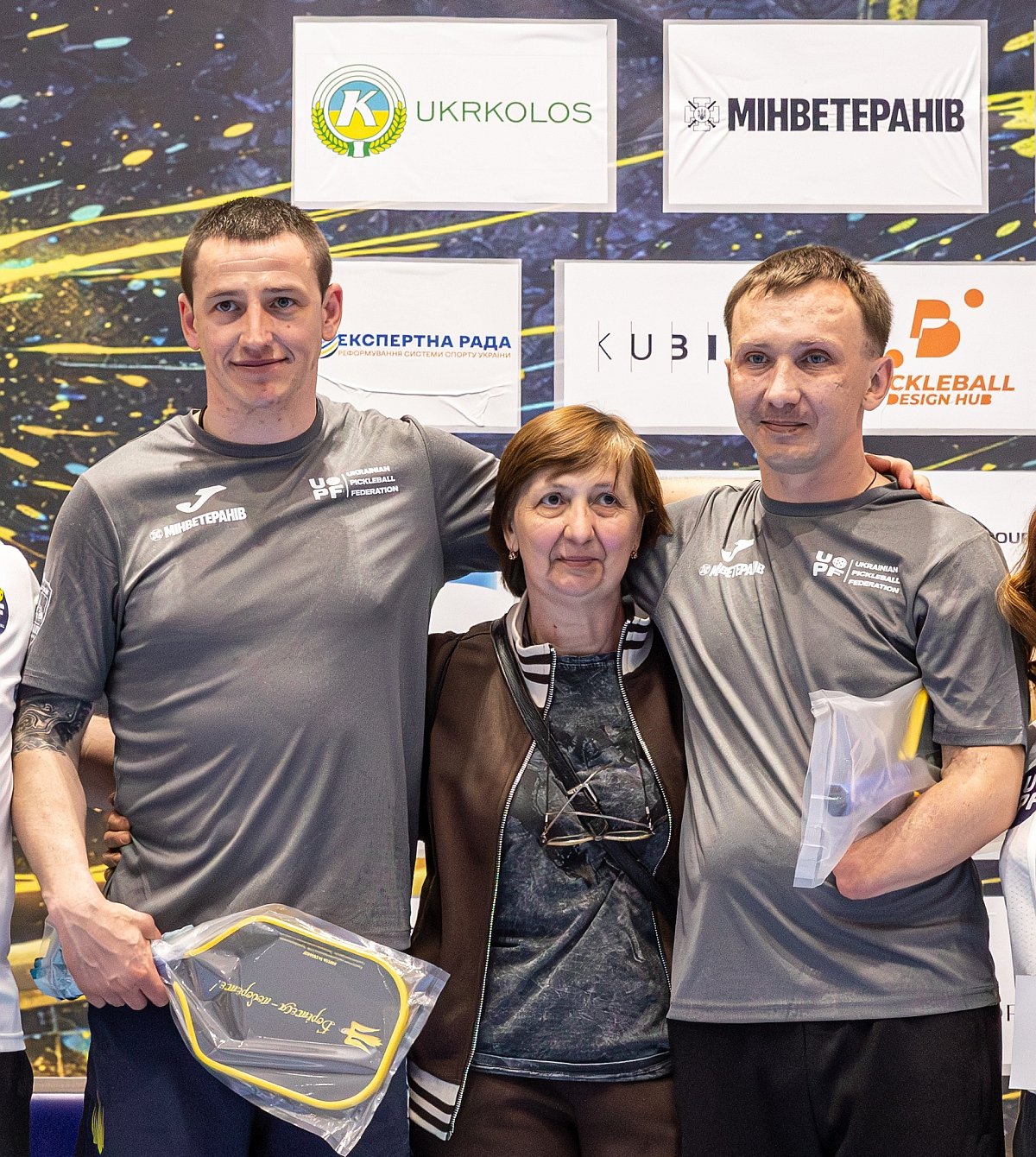
On the last day of the championship, a woman came looking for the organizers. Her name was Tetiana. She was Oleksandr’s mother.
She had been there the whole time, she said — through the coma, through the hospitals, through the months of relearning how to speak and walk. She had told him, over and over, that he could do anything.
She wanted to thank someone for the competition. For what it had done to her son.
“He is so motivated now,” she said. “He wants to train. He wants to participate. He wants to live actively again.”
She said it with tears in her eyes, the good kind a mother cries when she watches her child find his way back.
Oleksandr still fishes. He went back to it after losing both hands. He plans to keep playing pickleball. He wants bionic prosthetics one day, a car he can drive himself, and to see more of the world.
Oleksandr and Mykola have a dream like everyone else in Ukraine: for the war to end, and for everyone to come home.
The Ukrainian Pickleball Federation (UPF) is the 60th member of the Global Pickleball Federation, representing Ukraine in international pickleball. (pickleballukraine.net)
Anywhere Pickleball is a San Diego-based pickleball company and the official strategic partner of the UPF. (anywherepickleball.com)
It’s not tennis. It’s not ping-pong. It’s somewhere in between—and somehow more fun. Pickleball is the fastest-growing sport in the U.S., and if you’ve heard...
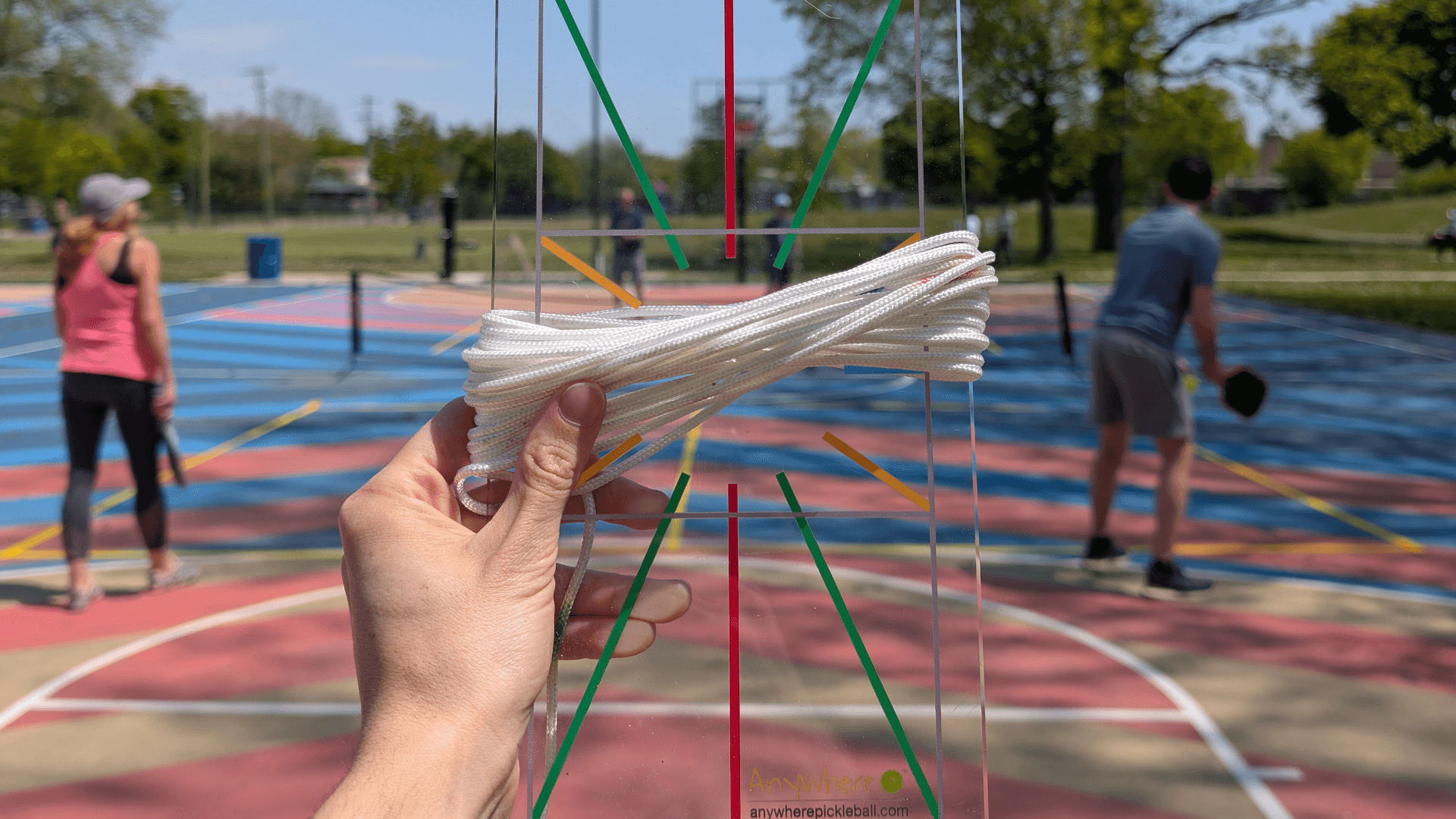
Line it up. Angle it right. Play anywhere—without guessing. Setting up a court doesn’t need to be complicated—or require geometry homework. That’s why every Anywhere...

 20May
20May
 by
by 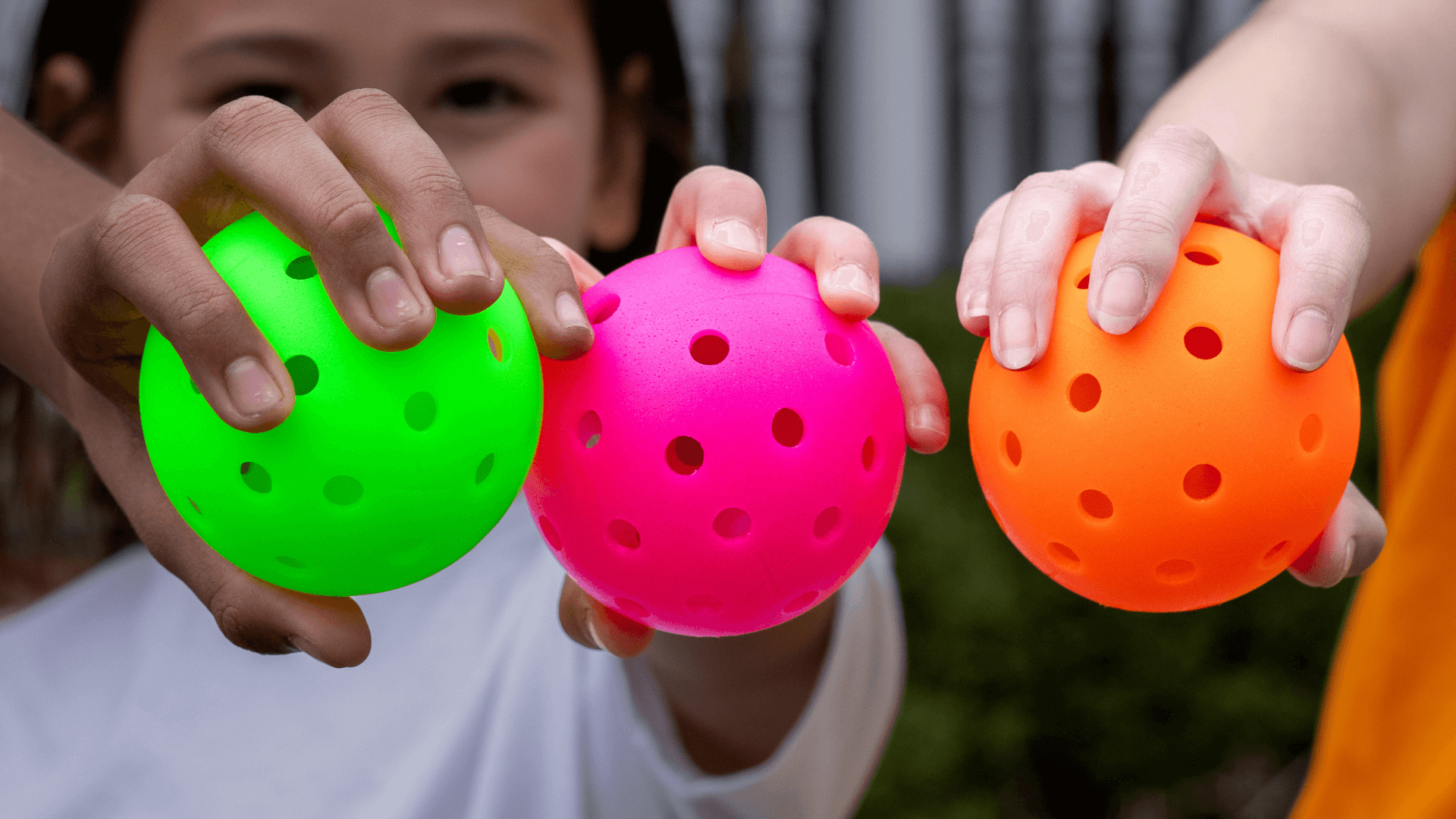
Comments are closed